Fear Has No Place in Parenting
We’ve normalized fear in parenting.
Fear of “raising a brat.”
Fear of “being too soft.”
Fear that if we don’t yell, punish, or threaten—we’ll lose control.
Fear that our kids will grow up disrespectful, entitled, or out of touch with reality.
But here’s the truth:
Fear might get quick compliance…
but it always costs connection.
From Punishment to Peace: The Power of Conscious Consequences
There’s a moment all parents face—
When your child pushes a limit, breaks a rule, or explodes emotionally…
and you feel that familiar pull toward punishment.
“Take it away.”
“Go to your room.”
“No more privileges.”
Finding Your Calm : Transforming Your Home
As adults—and especially as parents—those old lessons come back to haunt us. We try so hard to stay patient and composed with our kids, but underneath? Our bodies are tight with tension. Our chests are pounding. Our voices are sweet but our insides are screaming.
The New Discipline: Firm, Connected & Free From Fear
For far too long, discipline has been defined by control.
By raised voices.
By hands that stung.
By disconnection that left wounds deeper than anyone could see.
We have been told that children needed to hurt in order to learn.
That a swat on the bottom would “teach them a lesson.”
That without punishment, they’d turn out spoiled, disrespectful, and lost.
Your Calm is a Legacy, Your Love is a Revolution

You’re not just managing behavior or surviving the chaos of daily life.
You’re breaking patterns. You’re rewiring your brain and changing reactions to thoughtful responses.
You’re standing in the middle of a battlefield most people never even see —
and choosing connection instead of control.
Tracing The Trigger & Getting To The Root of Our Reactions
We have all had moments where something sets us off and the parent we act like isn’t the parent we want to be. When you have those moments, just remember… Rage isn’t who you are—it’s just what your nervous system learned to do
It’s always the moment you least expect.
You’re fine. Holding it together. Doing your best to keep things calm.
Then—your child refuses to listen. Or talks back. Or spills the drink after you asked them not to. Again.
Be Their Mirror – Building Emotional Intelligence Through Modeling It
You can explain emotional regulation.
You can talk about big feelings.
You can even give your child all the right words for what they’re experiencing.
But if you want to truly teach emotional intelligence?
You have to live it.
That’s the hard part.
Because it means letting your child see you in the moments you used to hide.
It means choosing calm—even when your first instinct is to yell.
It means pausing instead of snapping. Repairing instead of defending. Owning instead of blaming.
Beyond Deep Breaths : Learning Co-Regulation
Sometimes it takes more than a few deep breaths.
Sometimes you’re mid-meltdown—maybe your child’s, maybe your own.
You offer a deep breath, a stuffed animal, maybe a reminder to count to ten.
But nothing’s working.
Not for them.
And honestly? Not for you either.
It’s in these moments that many parents feel helpless or defeated.
We know we want to stay calm.
We try to help our kids calm down.
Securely Attached – Rooted & Grounded in Love

There is a kind of safety that goes deeper than rules and routines.
It’s the safety of being known. Of being loved without needing to earn it.
Of being accepted in both your big emotions and your quiet moments.
That’s what secure attachment is all about.
And you don’t need to be a perfect parent to create it.
You just have to keep showing up with love, even when it’s hard.
Especially when it’s hard.
The 5 Love Languages of Children: Quality Time
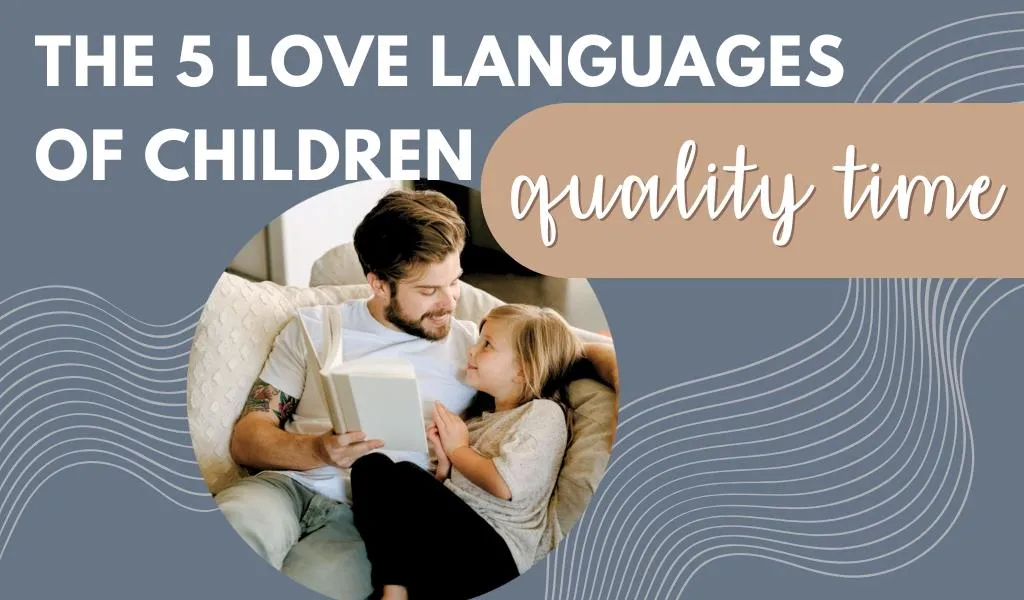
Every child longs to feel loved, but did you know that the way they receive love might be completely different from the way you naturally express it?
For some children, gifts mean the world. Others feel loved through hugs, words of encouragement, or acts of service. But for a child whose primary love language is Quality Time, nothing matters more than your undivided attention.